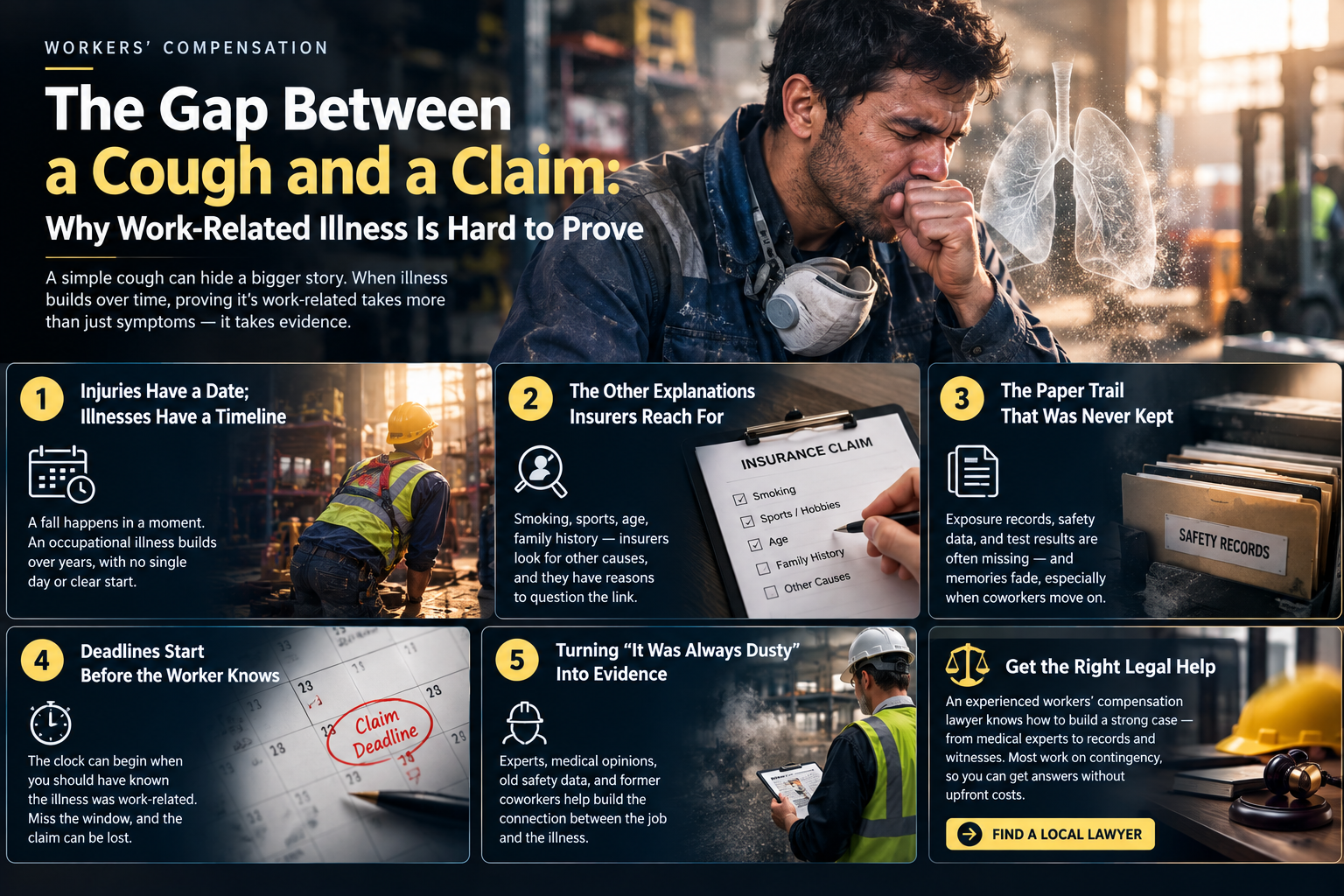


Private employers reported roughly 2.5 million nonfatal workplace injuries and illnesses in 2024. Spread across the calendar, that works out to about 6,800 new cases every day, weekends and holidays included. Behind each number sits a person who got hurt or sick at a job and had to decide what to do next, whether that meant seeking medical care or discussing a potential claim with Golden State Workers Compensation, APC.
What a Rate of 2.3 Looks Like on the Shop Floor
The overall rate came in at 2.3 cases per 100 full-time-equivalent workers. That unit needs a quick explanation. One full-time-equivalent stands for 2,000 hours worked in a year, so two half-time employees count as one. The measure keeps a staffing agency full of part-timers from looking safer than a plant running three shifts.
In plain terms, about one in every 43 full-time workers had a recordable injury or illness last year. A warehouse with 100 employees should expect two or three entries on its injury log annually. Seen that way, 2.3 stops sounding like a rounding error.
Where the Cases Pile Up
An average hides a lot. Some industries sit far above 2.3, and others fall well below it. Health care, manufacturing, retail, and warehousing and transportation produce the biggest piles of cases, and the reasons are mundane. Nurses lift patients who weigh more than they do. Packers repeat the same wrist motion thousands of times per shift. Delivery drivers climb in and out of cabs a hundred times a day, and every step is a chance to twist a knee.
Sprains, strains, and tears dominate the injury side, along with slips and falls. Office workers report fewer cases, but the ones they do report, like nerve pain from a badly set-up desk, tend to be dismissed until they get worse.
The Cases Nobody Counted
The 2.5 million figure covers private employers only. Self-employed workers fall outside it, as do some household workers, and public-sector employees are tracked in a separate dataset. Then there are the workers who never report at all. A supervisor discourages the paperwork, or a new hire fears being labeled difficult, or someone decides the aching back is just part of the job. Studies comparing employer logs with medical and insurance records have repeatedly found that injury counts fall short of reality. Treat 2.5 million as a floor.
The Clock Starts at the Report
Reporting to the employer starts the clock, and the deadlines differ from state to state. Some give a worker 30 days to notify the employer. Miss that window and the claim gets harder, sometimes impossible.
Workers’ compensation pays medical bills and a portion of lost wages without anyone having to prove fault. In practice, the system moves slowly. Insurers dispute whether the injury happened at work. They point to a pre-existing condition, or they stop approving treatment before the doctor says recovery is finished.
How a Missing $200 Shrinks the Check
Wage calculations are another weak spot. Take a worker who earns $900 a week in base pay plus about $200 in regular overtime. Benefits in most states run near two-thirds of the average weekly wage. If the insurer leaves the overtime out, the check is roughly $600 instead of $733. That $133 gap repeats every week for as long as the claim runs, and few people catch it without someone pointing at the math.
What a Workers’ Comp Lawyer Does and When to Call One
This is where workers’ compensation lawyers earn their reputation. They know how adjusters build a denial and which medical records answer it. They file the appeals, argue the wage figure, and stand beside the worker at a hearing. Fees usually come out of the benefits recovered, with limits set by state rules, so a first consultation rarely costs anything. Anyone weighing a call to a lawyer will find the nearest office listed right below:
Timing matters as much as skill. The best moments to call one are before giving a recorded statement to the insurer, right after a denial letter arrives, when the doctor releases you to work with restrictions your employer ignores, and before signing any settlement. A settlement usually closes the claim for good, including medical care you might still need two years from now. A lawyer who handles these cases every week knows what similar injuries tend to settle for, which is information a first-time claimant simply does not have.
What Separates the Smooth Claims From the Stuck Ones
A rate of 2.3 looks small on a chart until the case belongs to you. The workers who recover best do the same few things: they report the injury right away, see a doctor and name work as the cause, write down what happened while the details are fresh, and keep copies of everything. The ones who get stuck usually waited. A form filed this week costs nothing, while one filed after a missed deadline costs the claim.