
Daylight saving time ends on Sunday, November 1, 2026, and suddenly the evening walk home from work happens at dusk or after dark.
That shift matters more than it seems. Drivers who got used to spotting people on the sidewalk in daylight now pass them in dim light, and darkness is where most pedestrian deaths happen.
This guide covers:
- The Ohio rules for walking near traffic
- What happens when a driver still hits a pedestrian
- What the data says about walking after dark
- Practical ways to stay visible
What Ohio Law Expects
Ohio’s traffic code spells out where pedestrians belong. Where a usable sidewalk exists, people shouldn’t walk in the roadway. Where there’s no sidewalk, they should use the shoulder, and if there’s neither, they should stay near the outside edge and, on a two-way road, walk on the left side facing traffic. Crossing outside a crosswalk means yielding to vehicles, though drivers still must use due care to avoid pedestrians.
Drivers have duties too. When signals aren’t assigning the right of way, they must yield to a pedestrian in a crosswalk on their half of the road, or one approaching from the other half closely enough to be in danger.
Those rules often come up after a crash, so injured walkers may want to read about Anzellotti, Sperling, Pazol & Small for Ohio pedestrian accident claims before giving a statement to an insurer.
If a Driver Still Hits You
Even careful walkers get hit. Ohio compares fault after a crash, and an injured pedestrian can still recover as long as their share isn’t greater than the combined fault of the others involved. The award then shrinks by the pedestrian’s percentage. Lighting, clothing, and where the person was crossing often factor into those numbers.
Picture someone struck while crossing mid-block on Market Street after dark. The driver’s insurer may argue the walker should have used the crosswalk, while the walker’s side points to speed or distraction.
Injured walkers often contact a Youngstown personal injury law firm quickly, since nearby video and witness memories fade fast.
Why Darkness Raises the Risk
According to the National Highway Traffic Safety Administration, 7,314 pedestrians were killed in U.S. traffic crashes in 2023, and 77 percent of those deaths happened in the dark. Most occurred away from intersections. Ohio recorded 145 pedestrian deaths that year, out of 1,242 traffic deaths statewide. Drivers simply can’t avoid what they can’t see.
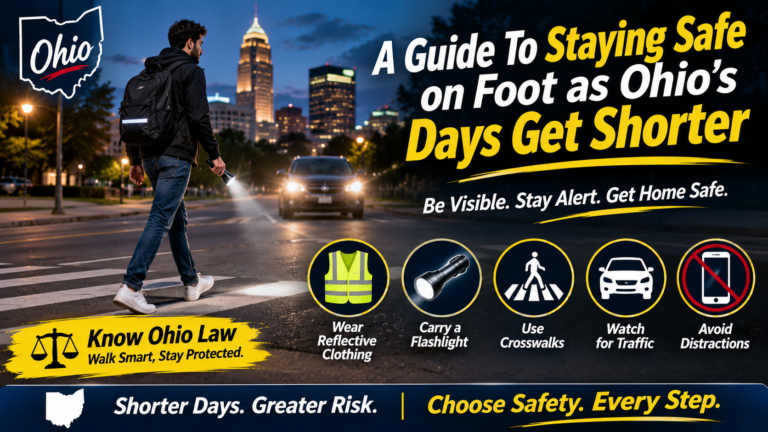
A few inexpensive habits make walkers easier to spot:
| Habit | Why it helps |
| Wear light or reflective clothing | Headlights pick you up sooner |
| Carry a flashlight or use a phone light | Makes you easier to spot |
| Cross at marked crosswalks and lit corners | Drivers expect people there |
| Put the phone away near traffic | Your eyes and ears stay on cars |
| Face traffic when there’s no sidewalk | You can see oncoming cars |
Drivers share the load, and slowing down near crosswalks gives them more time to react.
The Bottom Line
Shorter days put more walkers in the dark, where most pedestrian deaths happen. Following Ohio’s rules and staying visible lowers the risk, and understanding comparative fault helps if a crash still occurs.
Key Takeaways
- Wear something reflective or carry a light on every walk after sunset.
- With no sidewalk, use the shoulder, or walk on the left facing traffic if there’s no shoulder.
- Photograph the scene and lighting if you’re ever struck.
Leaving a few minutes earlier, or choosing a better-lit route, is an easy trade for getting home safely.
Frequently Asked Questions
What are some safety tips for walking in the dark?
Wear light or reflective clothing, carry a flashlight or use your phone’s light, and stick to sidewalks and lit crossings. Where there’s no sidewalk, Ohio law directs pedestrians to the shoulder or, if there’s none, to the outside edge, on the left facing traffic on a two-way road.
What are three safety tips for pedestrians?
Be visible, be predictable, and stay alert. Wear bright or reflective gear, cross at crosswalks or intersections where drivers expect you, and keep your phone away while near traffic so you can see and hear approaching vehicles in time to react.
What are some common nighttime safety tips?
For walkers, visibility and route choice matter most, so pick well-lit streets and wear reflective items. For drivers, slow down, keep headlights clean, and take extra care near crosswalks and bus stops, since pedestrians are harder to spot at night.
What are 5 tips for driving at night?
Slow down, keep your windshield and headlights clean, dim your high beams for oncoming traffic, avoid distractions, and scan the edges of the road for pedestrians and cyclists. Leaving extra following distance also gives you more time to react if someone steps out.
What are 10 important road safety rules for pedestrians?
Use sidewalks, face traffic when there’s none, cross at crosswalks, obey signals, look both ways, make eye contact with drivers, stay visible at night, avoid distractions, don’t assume drivers see you, and take extra care around turning vehicles and parked cars.