
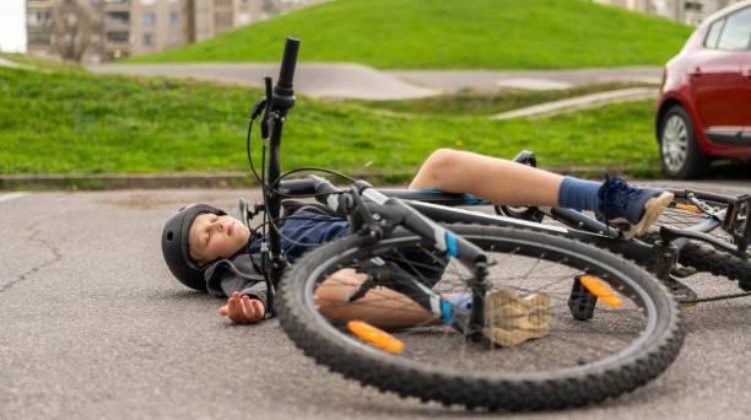

Yes, they do, though the protections come as adjustments to the usual rules rather than a separate set of laws. In California, a child’s own fault is judged by a gentler standard, the deadline to sue is generally pushed back until the child turns 18, and a judge has to approve any settlement.
Riverside County’s mix of suburban neighborhoods, busy roads, and growing use of e-bikes among young riders makes child bicycle safety an important local concern. Crashes involving young riders have been climbing in Riverside County, where emergency visits for e-bike accidents rose from 224 in 2023 to 958 in 2025, and visits among 10- to 14-year-olds more than doubled between 2024 and 2025.
Parents dealing with that kind of crash often start by looking for bike accident legal support in Riverside, and knowing how the law treats children makes those first conversations easier. In this post, we will walk through how fault, filing deadlines, and claims against public agencies work when the injured rider is a child.
What Legal Protections Do Child Cyclists Have After a Crash?
Here are the legal protections that are available to child cyclists after they are involved in crashes:
Children are judged as children, not adults
California juries are asked whether the child acted as a reasonably careful child of the same age, intelligence, knowledge, and experience would have, and the standard is tied to that particular child rather than an average one, according to CACI 402.
Children under five cannot be found contributorily negligent at all. The helmet rule in Vehicle Code 21212 covers every rider under 18, yet breaking a statute only creates a presumption of negligence that a child can rebut by showing they acted as children of similar maturity usually do.
Any fault assigned to the child can still reduce the family’s recovery, which is called comparative negligence.
Children usually get extra time to file
Under Code of Civil Procedure 352, the years a person spends under 18 do not count against the filing deadline, so the usual two-year window for injury claims generally begins on the 18th birthday.
Claims against a city or school district run on a shorter clock
That extra time does not apply when the defendant is a public agency, which matters if a pothole or a poorly marked crossing played a role. A written claim generally has to reach the agency within six months.
Minors do get some relief, since Government Code 911.6 says an agency must grant a late-claim request when the child was a minor for that whole period, though the request still has to be made within a reasonable time, and no later than a year after the crash.
A judge signs off on settlements
A parent cannot simply accept an offer, because California requires court approval for any settlement involving a child, no matter how small the amount. The family files a petition, usually called a minor’s compromise, and the judge reviews the amount, the medical bills and any liens, and the attorney fees before deciding the deal is fair to the child.
The child and the guardian ad litem generally have to attend the hearing too, as laid out in the court procedure under Probate Code sections 3500 through 3613.
The court also controls where the money goes
Approval does not mean the funds are handed over to the family. Under Probate Code sections 3602 and 3611, the proceeds usually go into an insured blocked bank account that releases the money when the child turns 18, or into a court-supervised trust, so the settlement is protected until the child is an adult.
Brief Summary
- Child cyclists are held to the care expected of a reasonably careful child of the same age and experience, and children under five cannot be found at fault.
- The helmet law covers every rider under 18, yet not wearing one does not by itself decide who caused the crash.
- The two-year deadline for most injury lawsuits generally starts on a child’s 18th birthday.
- Claims against a city, county, or school district need a written claim within six months, with a late-claim option for minors.
- A late-claim request still has to be filed promptly, so waiting until the child turns 18 can be costly with public agencies.
- A judge must approve any settlement of a child’s injury claim.