
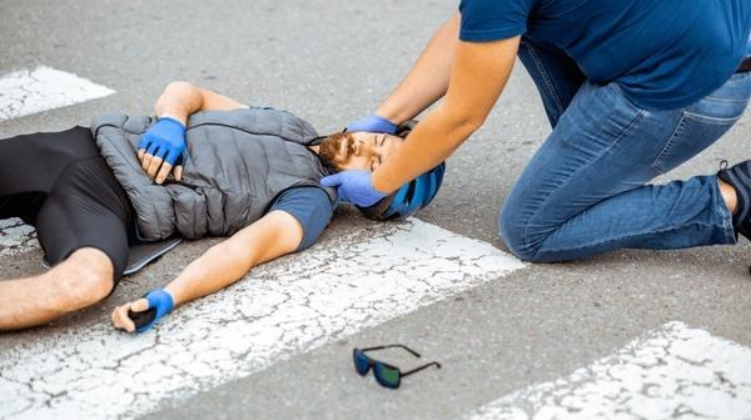

Yes, a city can be held liable for a pedestrian accident caused by a broken traffic signal, but certain legal conditions must be met. Government entities have immunity from some lawsuits, so proving negligence requires evidence of the defect, the agency’s knowledge of it, and a connection between the malfunction and the injuries.
Sacramento, California’s capital, has major pedestrian corridors and busy intersections along routes such as Broadway, J Street, and Florin Road, where traffic signals help manage the movement of vehicles and people crossing the street.
If a signal malfunctions and creates an unsafe crossing, determining when the defect occurred and whether the responsible public agency knew about it can become important to a pedestrian injury claim. When a faulty traffic signal contributes to an accident, Sacramento pedestrian accident lawyers can help explain public entity liability and the evidence needed to support an injury claim.
Let’s get started!
When Can the City Be Held Liable?
California Government Code Section 835 allows recovery of damages for injuries caused by a dangerous condition of public property under certain circumstances. The malfunction must have created a foreseeable risk, caused the injury, and either resulted from a wrongful act by a public employee or remained uncorrected after the agency had actual or constructive notice.
Notice can make or break a claim. If residents reported the problem, repair requests were submitted, or the defect existed long enough that a reasonable inspection should have detected it, the pedestrian may have a stronger case.
If the failure occurs suddenly and the city had no reasonable opportunity to discover it, establishing liability becomes more difficult.
How Can Shared Responsibility Affect a Claim?
A pedestrian’s own actions may also affect the outcome. Under California’s comparative negligence rules, an injured person can still recover damages even if they share some responsibility for the accident, although compensation may be reduced according to their percentage of fault.
For example, a driver who ignores a malfunctioning signal may bear responsibility alongside a city that neglected repeated repair requests. Each party’s conduct must be examined to determine how liability should be divided.
What Evidence Helps Prove the Claim?
Evidence should connect the signal failure to the collision and demonstrate what the agency knew. Photographs or videos of the intersection, witness statements, nearby surveillance footage, police reports, medical records, and maintenance or complaint logs can all be valuable.
The signal’s condition and the driver’s actions also matter, since a broken signal alone does not automatically make the city liable.
The Federal Highway Administration explains that pedestrian signal problems can create dangerous conditions and emphasizes prompt reporting and repairs. Its pedestrian facility maintenance guidance addresses signal maintenance and response times.
Witnesses may help establish how the signal behaved before the collision and whether drivers had enough time to react. Maintenance records can reveal whether the city delayed repairs despite repeated warnings.
What Deadlines Apply in California?
Claims against public agencies follow special rules. In most California personal injury cases involving a city or other public entity, an administrative claim must be filed within six months of the injury.
If the agency rejects the claim, the injured person generally has six months from the date the rejection notice is personally delivered or mailed to file a lawsuit. Exceptions may apply, so the applicable deadlines and notice requirements should be checked carefully. Missing a deadline can prevent an injured pedestrian from recovering compensation.
Final Takeaways
- A dangerous, defective signal may expose a city to liability.
- California Government Code Section 835 outlines the requirements for public property claims.
- Notice, maintenance, and causation are important factors.
- Photographs, eyewitness accounts, and repair logs may help establish negligence.
- Government claims have strict filing deadlines, often six months after an injury.
- A city is not automatically liable whenever a traffic signal malfunctions.