


Courtroom language can sound confusing if you are unfamiliar with legal procedures. One of the most common phrases people hear during trials is “Objection, sustained.” Understanding what does sustained mean in court helps explain how judges control courtroom proceedings and ensure that evidence and testimony follow the law.
Many people search this term after watching courtroom dramas, serving on a jury, attending a hearing, or reading about a legal case. They often want to know whether a sustained objection means someone has won, whether evidence is excluded, and how it affects the outcome of a trial.
This guide explains the legal meaning of “sustained,” how courtroom objections work, why judges sustain or overrule objections, real-world examples, and what these rulings mean for attorneys, witnesses, jurors, and anyone involved in court proceedings.
What “Sustained” Means in Court
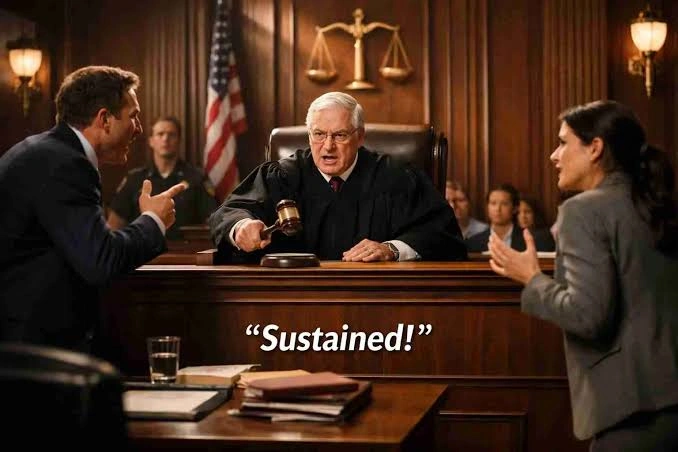
In court, “sustained” means that the judge agrees with an attorney’s objection. The judge has determined that the objection is legally valid, so the witness may not answer the question, or the evidence being challenged may not be admitted.
A sustained objection does not mean one side automatically wins the case. Instead, it simply means that a particular question, statement, or piece of evidence violates a rule of evidence or courtroom procedure.
For example, if a lawyer asks a witness to repeat something they heard from another person, the opposing attorney may object on hearsay grounds. If the judge says, “Sustained,” the witness cannot answer that question unless an exception to the hearsay rule applies.
Throughout a trial, judges may sustain many objections while allowing others. These decisions help keep testimony relevant, fair, and legally admissible.
Quick Definitions for Courtroom Objections
Understanding a few basic courtroom terms makes it much easier to follow legal proceedings.
| Term | Meaning |
|---|---|
| Objection | A lawyer’s formal challenge to a question, statement, or evidence. |
| Sustained | The judge agrees with the objection. |
| Overruled | The judge disagrees with the objection, allowing the question or evidence. |
| Strike | The judge orders testimony or evidence removed from the official record. |
| Admissible Evidence | Evidence that complies with the rules and may be considered by the court. |
| Hearsay | An out-of-court statement generally offered to prove the truth of the matter asserted. |
These terms appear frequently during trials because attorneys continually monitor whether courtroom rules are being followed.
The Legal Definition of Sustained
Legally, a sustained objection is a judicial ruling that an attorney’s objection has merit under the applicable rules of evidence or procedure.
When a judge sustains an objection, the court recognizes that the challenged question, testimony, argument, or evidence should not continue in its current form.
The ruling may require one or more of the following:
- The witness stops answering.
- The attorney asks a different question.
- Evidence is excluded.
- Improper testimony is disregarded.
- The jury is instructed to ignore certain statements.
Importantly, sustaining an objection addresses only that specific issue. It does not determine whether a party is truthful, liable, or entitled to win the case.
Judges make these decisions based on established legal rules rather than personal opinions or preferences.
How Objections Work in Court
Courtroom objections allow attorneys to challenge questions or evidence they believe violate legal rules before potentially improper information reaches the judge or jury.
The process usually follows a predictable sequence.
- An attorney asks a question or introduces evidence.
- The opposing attorney objects and states the legal reason.
- The judge considers the objection.
- The judge either sustains or overrules it.
- The trial continues according to the judge’s ruling.
For example, a lawyer may object because a question is leading, calls for speculation, lacks foundation, or seeks inadmissible hearsay.
These objections are essential because they help preserve fairness throughout the trial and create a record for possible appeals if legal errors occur.
Without objections, inadmissible evidence could improperly influence the outcome of a case.
Common Reasons a Judge Sustains an Objection
Judges sustain objections whenever a question or piece of evidence violates courtroom rules designed to ensure a fair trial.
Some of the most common reasons include:
- Hearsay: The witness repeats someone else’s statement without a legal exception.
- Leading Question: The attorney suggests the desired answer when not permitted.
- Relevance: The question has little or no connection to the issues before the court.
- Speculation: The witness is asked to guess instead of testify from personal knowledge.
- Argumentative Question: The attorney argues with the witness instead of asking factual questions.
- Asked and Answered: The same question has already been answered.
- Lack of Foundation: The attorney has not established enough background for the evidence.
- Opinion Without Qualification: A witness offers expert opinions without being qualified.
Each objection serves to protect the integrity of the judicial process and ensure that only reliable evidence is considered.
Common Types of Objections That Are Sustained
Although many objections can arise during litigation, several appear regularly in criminal and civil court proceedings.
Hearsay
Hearsay is one of the most frequently sustained objections.
Generally, witnesses must testify about what they personally saw, heard, or experienced rather than repeating another person’s statements. While there are recognized exceptions, hearsay is often excluded because the original speaker cannot be cross-examined.
Leading Questions
Leading questions suggest the answer within the question itself.
They are usually prohibited during direct examination because they may influence the witness’s testimony. However, they are commonly allowed during cross-examination.
Speculation
A witness may testify only about facts within their personal knowledge.
If an attorney asks a witness to guess what another person intended, believed, or might have done, the judge may sustain a speculation objection.
Relevance
Evidence must help prove or disprove an important fact in the case.
If a question has no meaningful connection to the legal issues before the court, the judge may rule that it is irrelevant and sustain the objection.
Argumentative
Attorneys are expected to ask questions—not debate with witnesses.
Questions intended to provoke, intimidate, or argue rather than obtain testimony often result in sustained objections.
Lack of Foundation
Before introducing evidence, attorneys must establish sufficient background showing that it is authentic and relevant.
If that foundation has not been laid, the judge may sustain the objection until the proper groundwork is established.
Sustained vs. Overruled: Simple Comparison Table
Although both rulings happen after an objection, they have opposite legal effects. A sustained objection means the judge agrees with the attorney making the objection, while an overruled objection means the judge disagrees and allows the questioning or evidence to continue.
| Feature | Sustained | Overruled |
|---|---|---|
| Judge’s Decision | Agrees with the objection | Disagrees with the objection |
| Question Allowed? | No | Yes |
| Witness Answers? | Usually no | Yes |
| Evidence Accepted? | Often excluded | Usually admitted |
| Trial Continues | With a different question or evidence | Without interruption |
| Benefits Which Side? | The attorney making the objection | The attorney whose question or evidence was challenged |
Understanding this distinction helps explain many courtroom exchanges and why lawyers frequently object during testimony.
What Does “Overruled” Mean in Court?
An objection is overruled when the judge decides that the attorney’s challenge is not legally valid. As a result, the witness may answer the question, or the evidence may be presented to the court.
An overruled objection does not mean the objecting lawyer was wrong in every respect. It simply means the judge believes the question or evidence complies with the applicable rules of evidence and procedure.
For example, if an attorney objects by claiming a question is irrelevant but the judge determines it is directly related to the issues being tried, the judge will respond with “Overruled.” The witness must then answer unless another valid objection arises.
During a trial, attorneys may have many objections sustained and many others overruled. These rulings are a normal part of courtroom advocacy.
What Happens After an Objection Is Sustained?
Once an objection is sustained, the judge immediately directs the trial back into compliance with courtroom rules.
Exactly what happens next depends on the type of objection and the stage of the proceedings.
Common outcomes include:
- The witness stops answering the question.
- The attorney asks a different question.
- The judge excludes certain evidence.
- Improper testimony may be stricken from the record.
- The jury may receive instructions to disregard specific statements.
- The attorney may rephrase the question to avoid the legal problem.
If the objection concerns only the wording of a question, the attorney often continues after changing how the question is asked.
If the objection involves inadmissible evidence, however, that evidence may never be presented to the jury.
A sustained objection helps prevent improper testimony from influencing the court’s decision-making process.
Common Scenarios Where You Would Hear “Sustained” in Court
The word “sustained” appears in many different types of legal proceedings, including criminal trials, civil lawsuits, family court cases, and administrative hearings.
Some common courtroom situations include:
- A lawyer asks a witness to repeat hearsay.
- An attorney asks a leading question during direct examination.
- A witness begins guessing instead of testifying from personal knowledge.
- A lawyer introduces documents without establishing authenticity.
- An attorney asks repetitive or argumentative questions.
- Evidence unrelated to the issues in dispute is offered.
In each situation, the opposing attorney may object. If the judge agrees that the objection has legal merit, the ruling will be “Sustained.”
These rulings help ensure that trials remain focused on reliable and legally admissible evidence.
Real Examples of Sustained Objections in Court Proceedings
While every case is different, the following examples illustrate how sustained objections work in practice.
Example 1: Hearsay
Attorney: “What did your neighbor tell you happened?”
Opposing Attorney: “Objection, hearsay.”
Judge: “Sustained.”
The witness cannot repeat what another person allegedly said because the statement may not satisfy a hearsay exception.
Example 2: Leading Question
Attorney: “The traffic light was red, wasn’t it?”
Opposing Attorney: “Objection, leading.”
Judge: “Sustained.”
The attorney must ask a neutral question instead of suggesting the desired answer.
Example 3: Speculation
Attorney: “Why do you think the defendant left the building?”
Opposing Attorney: “Objection, calls for speculation.”
Judge: “Sustained.”
The witness may only testify about facts personally observed, not assumptions about another person’s intentions.
Example 4: Relevance
Attorney: “What color was the witness’s car five years earlier?”
Opposing Attorney: “Objection, relevance.”
Judge: “Sustained.”
If the information has no meaningful connection to the legal issues, it is properly excluded.
These examples demonstrate that sustained objections focus on enforcing legal rules rather than deciding who is right or wrong in the case.
How Sustained Objections Affect the Jury
In jury trials, sustained objections play an important role in ensuring jurors consider only legally admissible evidence when deciding a case.
If a judge sustains an objection before a witness answers, the jury never hears the information. If the witness has already responded, the judge may instruct the jury to disregard the testimony. While jurors are expected to follow these instructions, completely forgetting what they heard can be difficult.
For this reason, attorneys carefully time their objections, and judges act quickly to minimize the impact of improper testimony.
A sustained objection also reinforces the fairness of the trial. It prevents unreliable, prejudicial, or irrelevant information from influencing the jury’s decision and helps ensure the verdict is based only on admissible evidence presented in court.
Sustained in Appellate Courts
The word “sustained” is not limited to objections made during a trial. It can also appear in appellate court decisions, although its meaning depends on the context.
In appellate proceedings, a court may state that it sustains or rejects a particular legal argument, assignment of error, or issue raised by one of the parties.
For example, if an appellate court sustains an appellant’s argument that the trial judge improperly admitted evidence, it may reverse the judgment or send the case back to the lower court for further proceedings.
Unlike a trial objection, an appellate ruling usually concerns whether a legal error occurred during the original case rather than whether a witness may answer a specific question.
Although the context differs, the basic meaning remains the same—the court agrees with the legal position being challenged.
Motion Sustained Meaning
A motion is a formal request asking the court to issue a ruling or take a specific action during a legal proceeding.
When a judge states that a motion is sustained, it generally means the court agrees with the legal basis for the request and grants the relief sought, either fully or in part.
Examples include:
- Sustaining a motion to strike improper testimony.
- Sustaining a motion to exclude inadmissible evidence.
- Sustaining a procedural motion filed during litigation.
The exact effect depends on the type of motion involved. In some cases, the ruling changes what evidence may be presented. In others, it affects scheduling, procedure, or how the trial moves forward.
The court’s written order usually explains precisely what was granted.
What Does “Withdrawn” Mean in Court?
The term “withdrawn” has a different meaning from “sustained.”
A matter is withdrawn when the attorney or party who raised it voluntarily takes it back before the judge rules or before the issue proceeds further.
For example:
- A lawyer withdraws an objection after recognizing it lacks legal support.
- An attorney withdraws a question before the witness answers.
- A party withdraws a motion before the court considers it.
Once something is withdrawn, the judge often does not need to rule on it because the requesting party has chosen not to pursue it.
This differs from a sustained objection, where the judge actively decides that the objection is legally valid.
| Term | Meaning |
|---|---|
| Sustained | The judge agrees with the objection or request. |
| Overruled | The judge disagrees with the objection. |
| Withdrawn | The attorney voluntarily removes the objection, question, or motion before a ruling. |
Why Judges Sustain or Overrule Objections
Judges do not decide objections based on which attorney argues more persuasively. Instead, they apply established rules of evidence and courtroom procedure to each situation.
When evaluating an objection, a judge considers questions such as:
- Is the evidence legally admissible?
- Is the question relevant to the issues being tried?
- Does the witness have personal knowledge?
- Does the testimony violate the hearsay rule?
- Would admitting the evidence unfairly prejudice one party?
- Has the attorney followed the applicable procedural rules?
If the objection satisfies the legal requirements, the judge sustains it. If the challenged question or evidence complies with the rules, the judge overrules the objection.
These decisions keep trials orderly, protect the rights of both parties, and help ensure that verdicts are based on reliable and admissible evidence rather than improper testimony or speculation.
How Understanding “Sustained” Helps You If You’re in Court
Whether you are a witness, juror, plaintiff, defendant, or simply observing a hearing, understanding what sustained means can make courtroom proceedings much easier to follow.
A sustained objection does not indicate that someone is guilty, innocent, truthful, or dishonest. It simply means the judge has determined that a particular question, answer, or piece of evidence does not comply with the applicable legal rules.
If you are involved in a case, recognizing the purpose of sustained objections can help you understand why attorneys sometimes interrupt testimony and why judges occasionally prevent certain evidence from being presented.
Remember these key points:
- A sustained objection means the judge agrees with the objection.
- It protects the fairness of the trial.
- It may prevent a witness from answering.
- It can exclude improper evidence.
- It does not determine the final outcome of the case.
Knowing these basics allows you to better understand courtroom proceedings without assuming that every sustained objection favors one side or decides the case.
Read: The Wellness Company Lawsuit
Read: MyChart Lawsuit Settlement
Read: Cora Pads Lawsuit
Read: Cora Tampons Lawsuit
Read: Exploring CNLawBlog
Read: Trellis Law
Frequently Asked Questions
What does sustained mean in court?
A sustained objection means the judge agrees that an objection is legally valid. The challenged question, testimony, or evidence is not allowed to continue in its current form.
Does a sustained objection mean someone wins the case?
No. A sustained objection only resolves a specific legal issue during the trial. It does not determine liability, guilt, innocence, or the final outcome of the case.
What is the difference between sustained and overruled?
A sustained objection means the judge agrees with the attorney making the objection. An overruled objection means the judge disagrees, allowing the question or evidence to proceed.
Can a witness answer after an objection is sustained?
Usually not. The witness must stop answering unless the attorney rephrases the question or the judge gives further instructions.
Can evidence still be used after an objection is sustained?
It depends on the ruling. Some evidence is excluded entirely, while other evidence may be admitted later if the attorney corrects the legal issue that caused the objection.
Why do lawyers make so many objections during trials?
Attorneys object to protect their clients’ rights and ensure that only relevant, reliable, and legally admissible evidence is presented to the court.
Final Thoughts
Understanding what does sustained mean in court helps demystify one of the most common courtroom rulings. When a judge sustains an objection, it simply means the court agrees that a particular question, answer, or piece of evidence violates the applicable rules of evidence or courtroom procedure.
Although sustained objections may temporarily interrupt testimony or prevent certain evidence from being presented, they are an essential part of ensuring fair legal proceedings. They help judges maintain order, protect the rights of all parties, and ensure that decisions are based on admissible evidence rather than improper or unreliable information.
Whether you are watching a trial, serving on a jury, or participating in a legal case, recognizing the difference between sustained, overruled, and withdrawn can make courtroom proceedings much easier to understand. While every case is unique, these rulings exist to promote fairness, accuracy, and confidence in the judicial process.