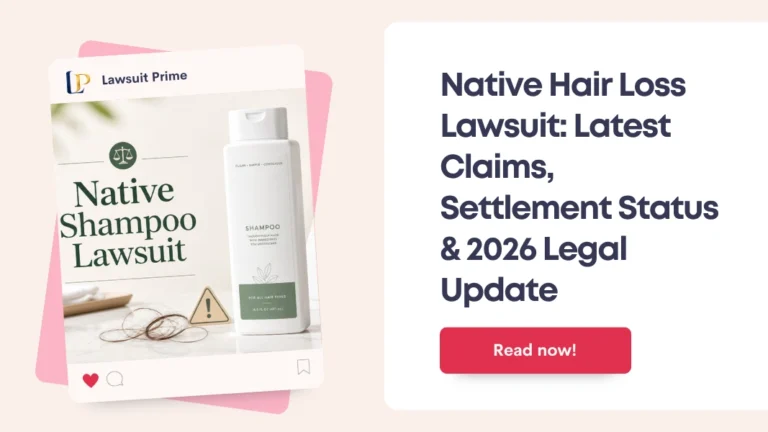

Native has become one of the most recognizable personal care brands in recent years, promoting shampoos and conditioners made with naturally inspired ingredients. However, the Native Hair Loss Lawsuit has drawn growing attention as some consumers claim they experienced excessive shedding, scalp irritation, or other hair-related problems after using certain products.
Many people searching online want to know whether a lawsuit has actually been filed, if there is a class action, whether a settlement exists, and who may qualify for compensation. Others are simply trying to understand whether reported hair loss has been scientifically linked to Native products or whether the complaints remain unproven.
This guide explains the current legal status, the allegations made by consumers, available scientific evidence, possible compensation, and what affected individuals should know before deciding whether to pursue a legal claim.
Native Hair Loss Lawsuit: What Is This Case Really About?
The Native Hair Loss Lawsuit refers to legal claims and consumer complaints alleging that certain Native shampoo and conditioner products caused unexpected hair loss, scalp irritation, dryness, or other adverse reactions. While many customers report positive experiences with Native hair care products, others claim they noticed problems after switching to the brand.
Most of the legal discussions focus on whether the products were adequately tested, whether ingredient labeling was sufficient, and whether consumers were properly warned about possible adverse reactions. Plaintiffs generally argue that they suffered financial losses, emotional distress, or physical injuries because of alleged product defects.
It is important to distinguish between consumer complaints and proven legal liability. Online reviews alone do not establish that a product causes hair loss. A successful lawsuit generally requires evidence showing a connection between product use and the alleged injury.
As of 2026, publicly available information indicates that legal activity involving Native hair care products continues to receive attention, but each claim depends on its own facts, medical evidence, and applicable consumer protection laws.
Native Shampoo Hair Loss Lawsuit: What Plaintiffs Are Claiming
Individuals pursuing claims against Native generally allege that they experienced noticeable changes after using certain shampoo formulations. The reported experiences vary considerably from one consumer to another.
Common allegations include:
- Excessive daily hair shedding
- Hair thinning over several weeks
- Scalp burning or irritation
- Persistent itching
- Dry or brittle hair
- Changes in hair texture
- Increased hair breakage
Plaintiffs generally argue that these effects appeared shortly after beginning regular use of Native shampoo and improved after discontinuing the product. Some also allege that the company marketed the products as gentle or naturally derived while failing to disclose potential risks.
Native has not admitted that its products cause hair loss. As with many product liability disputes, allegations made in lawsuits must ultimately be evaluated through scientific evidence, expert testimony, and court proceedings.
Hair loss itself can result from numerous unrelated factors, including genetics, hormonal changes, stress, nutritional deficiencies, medications, autoimmune conditions, and underlying medical disorders. Because of this, proving legal causation often requires extensive medical documentation.
Native Lawsuit Hair Loss: The Legal Foundation Behind These Claims
Most product liability lawsuits rely on established legal theories rather than simply alleging that a product caused harm. The Native hair loss claims generally involve one or more legal arguments commonly seen in consumer product litigation.
Potential legal claims may include:
| Legal Theory | What Plaintiffs Must Generally Show |
|---|---|
| Product liability | The product was allegedly defective and caused injury. |
| Failure to warn | Consumers were allegedly not adequately informed about potential risks. |
| Negligence | The manufacturer allegedly failed to exercise reasonable care. |
| Breach of warranty | The product allegedly did not perform as represented. |
| Consumer protection violations | Marketing or advertising allegedly misled consumers. |
Each legal theory requires different evidence. Courts generally consider medical records, ingredient analyses, expert opinions, product testing, and consumer documentation before determining whether a claim has merit.
Not every consumer complaint develops into a successful lawsuit, and not every lawsuit results in liability or compensation.
Is Native Shampoo Causing Hair Loss? What the Science Suggests
At present, there is no broad scientific consensus establishing that Native shampoo inherently causes hair loss in all users.
Hair shedding is a complex medical issue with many possible causes. Dermatologists often evaluate several contributing factors before attributing hair loss to a particular cosmetic product.
Scientific considerations include:
- Individual allergies
- Contact dermatitis
- Ingredient sensitivity
- Existing scalp conditions
- Hormonal disorders
- Stress-related hair loss
- Nutritional deficiencies
- Concurrent use of other hair products
Some individuals may develop scalp inflammation or irritation after exposure to ingredients that others tolerate without difficulty. Inflammation itself can contribute to temporary hair shedding in certain cases.
Researchers generally evaluate these situations using controlled studies, dermatological testing, adverse event reports, and clinical evidence. Consumer anecdotes alone cannot establish medical causation, although they may prompt further investigation.
Anyone experiencing sudden or significant hair loss should consult a dermatologist before assuming a cosmetic product is the sole cause.
Native Shampoo Ingredients Hair Loss: Which Compounds Are Being Blamed?
Many online discussions focus on ingredients rather than the brand itself. Consumers often question whether specific components found in hair care formulations could contribute to scalp irritation or increased shedding.
Ingredients discussed in complaints have included:
- Fragrance blends
- Certain preservatives
- Essential oils
- Surfactants used for cleansing
- Botanical extracts
- Conditioning agents
It is important to understand that the presence of an ingredient does not automatically mean it is unsafe. Most cosmetic ingredients are widely used across the industry and are considered safe when formulated appropriately and used as directed.
However, individual sensitivities differ. A substance that causes irritation for one person may produce no reaction in another. This is one reason product liability cases involving cosmetics often require expert testimony regarding formulation, toxicology, dermatology, and causation.
Some plaintiffs allege that particular ingredients triggered allergic reactions or scalp inflammation that contributed to temporary hair shedding. These allegations remain subject to scientific review and legal evaluation rather than being established facts.
Native Shampoo Side Effects Lawsuit: Beyond Just Hair Loss
Although hair loss is the issue attracting the most public attention, many legal complaints describe additional symptoms. Plaintiffs often argue that these reactions appeared during or shortly after using Native hair care products and, in some cases, improved after discontinuing use.
Reported side effects vary widely and do not affect every user. Individual reactions may also be influenced by allergies, underlying skin conditions, or other personal factors.
Some of the commonly reported complaints include:
- Scalp redness
- Burning or stinging sensations
- Persistent itching
- Dry or flaky scalp
- Increased hair breakage
- Hair texture changes
- Tenderness or sensitivity
- Excessive scalp dryness
Experiencing one or more of these symptoms does not necessarily mean the product caused the condition. Dermatologists typically evaluate a patient’s medical history, medications, hormonal health, and other hair products before identifying a likely cause.
If a consumer believes a cosmetic product caused an adverse reaction, preserving the product, taking photographs, and seeking prompt medical evaluation can help document the situation should legal action later become appropriate.
Native Conditioner Hair Loss Lawsuit: Are Conditioners Also Named?
Some consumers have questioned whether Native conditioners are also included in legal claims involving alleged hair loss. The answer depends on the specific lawsuit or complaint.
Certain plaintiffs allege they used both the shampoo and conditioner together as part of a complete hair care routine. In those situations, legal filings may reference multiple Native products rather than a single shampoo.
Others identify only one product as the suspected source of their symptoms. This distinction matters because attorneys typically investigate the exact products used, purchase dates, ingredient lists, and the sequence of events before determining whether a claim has legal merit.
Potential evidence may include:
- Product receipts
- Batch or lot numbers
- Product packaging
- Medical records
- Dermatology evaluations
- Photographs documenting hair loss
- Timeline of product use
At present, publicly available information does not establish that every Native conditioner is involved in litigation. Whether a specific conditioner becomes part of a lawsuit depends on the facts alleged by individual plaintiffs and the evidence supporting those allegations.
Native Products Hair Loss Class Action: How This Case Is Structured
Many consumers wonder whether the Native hair loss litigation qualifies as a class action. The answer depends on the procedural posture of the specific case.
A class action allows one or more plaintiffs to represent a larger group of consumers who allegedly experienced similar harm. Before proceeding as a class action, a court generally must certify that the legal requirements for class treatment have been satisfied.
Alternatively, some product liability cases proceed as individual lawsuits or are coordinated through multidistrict litigation (MDL) rather than becoming a certified class action.
The structure often depends on factors such as:
- Number of affected consumers
- Similarity of legal claims
- Common factual issues
- Evidence supporting alleged injuries
- Applicable state and federal laws
As of 2026, consumers should not assume that every lawsuit involving Native products is part of a certified nationwide class action. Court filings and procedural developments continue to determine how these claims are handled.
Anyone considering legal action should verify the status of any pending litigation through publicly available court records or a qualified attorney rather than relying solely on social media or online discussions.
Who Qualifies for the Native Hair Loss Lawsuit?
Eligibility depends on the specific lawsuit, legal theory, and evidence available. There is no universal qualification standard that applies to every claim involving Native hair care products.
Generally, attorneys evaluating potential cases may consider whether a consumer:
- Purchased an eligible Native hair care product
- Used the product according to its intended instructions
- Experienced hair loss or another documented adverse reaction
- Sought medical evaluation when symptoms appeared
- Can identify when the product was purchased and used
- Has supporting documentation such as receipts or photographs
- Has evidence connecting the alleged injury to product use
Simply purchasing the product does not automatically create a valid legal claim. Likewise, experiencing hair loss alone does not establish that Native products caused the condition.
Medical evidence often plays a significant role in determining whether an individual case is strong enough to pursue.
Native Hair Loss Lawsuit Payout: Realistic Numbers for 2026
One of the most frequently searched questions concerns the potential value of a Native hair loss lawsuit.
As of 2026, no publicly confirmed settlement establishes a standard payout amount for Native hair loss claims. Any websites advertising guaranteed compensation or fixed settlement values should be viewed with caution.
If compensation were eventually awarded through settlement or litigation, the amount would likely depend on several factors, including:
| Factor | Potential Impact |
|---|---|
| Severity of injury | More significant documented injuries may support higher compensation. |
| Medical expenses | Treatment costs may increase recoverable damages. |
| Lost income | May apply if injuries affected employment. |
| Pain and suffering | May be considered depending on applicable law. |
| Quality of evidence | Strong documentation generally strengthens a claim. |
| Settlement structure | Individual awards often vary considerably. |
Every lawsuit is different. Even within a class action, compensation may differ among claimants based on the evidence submitted and the terms of any settlement approved by the court.
Native Hair Loss Lawsuit Compensation Amount: Factors That Affect What You Receive
If compensation eventually becomes available, courts or settlement administrators generally evaluate each claim individually rather than awarding identical amounts to every claimant.
Several factors can influence potential recovery:
- Medical diagnosis confirming the injury
- Duration of symptoms
- Extent of hair loss
- Dermatology treatment costs
- Prescription medication expenses
- Expert medical opinions
- Evidence linking product use to alleged harm
- Applicable state law
Consumers who maintain detailed records often place themselves in a stronger position should litigation move forward. Useful documentation may include purchase receipts, product photographs, physician reports, laboratory testing, and a timeline showing when symptoms began.
It is equally important to understand that compensation is never guaranteed. Plaintiffs must generally prove both injury and legal causation before damages may be awarded.
For individuals considering legal action, obtaining medical advice promptly and preserving relevant evidence are typically more important than focusing solely on potential payout estimates.
Native Hair Care Lawsuit Settlement: Where Things Stand Heading Into 2026
There is currently no verified Native hair care settlement specifically compensating consumers for shampoo-related hair loss. No publicly confirmed settlement administrator, court-approved settlement website, or established payment schedule has been identified for these allegations.
Native has attracted legal scrutiny over separate advertising questions. Attorneys have investigated whether some Native personal care products may contain PFAS despite marketing that emphasizes simple or naturally derived ingredients. That inquiry should not be confused with a certified hair-loss class action or an approved compensation program.
Online articles and social media posts sometimes describe the situation as though a major lawsuit or settlement already exists. Some of those pages appear to combine consumer hair-loss reports with unrelated litigation involving other shampoo brands. Others refer to an investigation as a filed class action, even though those are legally different stages.
The current status can be summarized as follows:
| Question | Current Status |
|---|---|
| Confirmed Native hair-loss settlement | None publicly verified |
| Approved settlement fund | None publicly announced |
| Official hair-loss claim form | None identified |
| Guaranteed payout | No |
| Consumer complaints | Reported online |
| Scientific proof of general causation | Not established |
| Separate PFAS advertising investigation | Publicly reported |
Consumers should therefore avoid websites promising automatic enrollment, guaranteed compensation, or immediate Native lawsuit payments. A legitimate class action notice ordinarily identifies the court, case number, settlement administrator, covered products, eligibility rules, and filing deadline.
How to File a Native Hair Loss Claim: Step-by-Step in 2026
Because no official Native hair-loss settlement claim form has been publicly confirmed, consumers cannot presently submit a standard settlement claim for guaranteed compensation. However, someone who believes a Native product caused a significant reaction can begin preserving evidence and exploring available options.
A practical documentation process includes:
- Stop using the suspected product. Keep the remaining contents instead of discarding the bottle.
- Photograph the packaging. Capture the product name, ingredient label, size, barcode, and lot or batch number.
- Preserve proof of purchase. Save receipts, online order records, credit card statements, or retailer account histories.
- Create a usage timeline. Record when use began, how frequently the product was applied, when symptoms appeared, and whether symptoms changed after discontinuation.
- Document the alleged injury. Take dated photographs showing thinning, breakage, scalp redness, or other visible effects.
- Obtain medical evaluation. A dermatologist can assess alternative causes such as hormonal changes, nutritional deficiencies, stress, medications, genetics, or scalp disease.
- Report the problem. Consumers may submit a cosmetic adverse-event report to the appropriate regulator and contact the manufacturer.
- Consult a qualified attorney when warranted. A product-liability or consumer-protection lawyer can determine whether the facts support an individual claim.
These steps do not guarantee that a lawsuit will be accepted. They help preserve information that may be needed if a formal case, investigation, or settlement develops.
Native Hair Loss Lawsuit Filing Deadline: Do Not Miss This Date
There is no publicly verified filing deadline for a Native hair-loss class action settlement because no approved hair-loss settlement or official claims program has been established.
A settlement deadline is created only after a case reaches the appropriate procedural stage. In a class action, the court generally approves a notice describing who is covered, which products qualify, what evidence is required, and when claims must be submitted.
Consumers should be cautious when a website lists a deadline without providing:
- The lawsuit’s full case name
- A court and case number
- The settlement administrator
- An official notice
- A court-approved settlement agreement
- A verifiable claims website
A separate issue is the statute of limitations. This is the legal period within which an individual lawsuit must generally be filed. It varies according to the state, the legal claim, when the alleged injury occurred, and when the consumer reasonably discovered its possible cause.
Waiting for a class action that may never be filed could affect an individual’s rights. A person with serious, medically documented harm should consider obtaining state-specific legal advice rather than relying on a speculative online deadline.
Native Shampoo Lawsuit 2026: The Key Developments This Year
The central 2026 development involving Native products is renewed attention to a potential false-advertising case concerning PFAS. In February 2026, ClassAction.org reported that attorneys were investigating whether certain Native personal care products contain PFAS despite representations involving naturally derived or simple ingredients. The notice stated that a class action could be filed, meaning the matter was presented as an investigation rather than an approved settlement.
That investigation is not the same as proof that Native shampoo causes hair loss. It also does not establish that every listed product contains PFAS or that consumers have suffered compensable physical injuries.
Hair-loss concerns continue to circulate largely through personal accounts, reviews, videos, and online discussions. A widely shared 2025 report described a consumer who attributed changes in her hair to Native products and called for a class action. The report documented her allegations, not a medical or judicial finding that Native caused the damage.
Available health-oriented commentary likewise notes that a direct causal link has not been scientifically established. Ingredients used in Native shampoos are commonly found in the broader hair-care market, although particular users may still experience irritation or sensitivity.
The legally accurate position is therefore narrower than many online headlines suggest: consumer concerns exist, a separate PFAS-related advertising investigation has been reported, but a certified Native shampoo hair-loss class action and settlement have not been verified.
Native Lawsuit Update 2026: What Has Changed and What to Watch
The most important change in 2026 is the publicized PFAS investigation concerning Native’s ingredient-related marketing. Consumers should watch whether that inquiry produces an actual complaint filed in court, is closed without litigation, or leads to a negotiated resolution.
Future developments that would materially change the legal status include:
- A complaint filed in state or federal court
- A case number naming Native or its parent company
- Judicial certification of a consumer class
- Testing evidence addressing specific products
- Expert opinions connecting a formulation to alleged injuries
- A company response filed in court
- A settlement agreement or class notice
- Appointment of an official settlement administrator
Consumers should also distinguish hair-loss allegations from other Native litigation. For example, a separate lawsuit challenged Native deodorant advertising regarding “72-hour odor protection.” A federal judge reportedly dismissed that matter in April 2025. It did not establish that Native shampoo causes hair loss.
Reliable updates should come from court dockets, regulator notices, counsel involved in a case, or an authorized settlement administrator. Repeated articles that cite one another without identifying a complaint or docket should not be treated as confirmation that a lawsuit exists.
Read: Celsius Drink Cancer Lawsuit
Read: Breo Ellipta Lawsuit
Read: 100 Day Dream Home Lawsuit
Read: Sierra Mist Trademark Lawsuit
Read: Yellow Freight Lawsuit
Read: Mallinckrodt Adderall Lawsuit
Read: Method Body Wash Lawsuit
Frequently Asked Questions
Is there an active Native Hair Loss Lawsuit in 2026?
No certified nationwide hair-loss class action or approved settlement has been publicly verified. Consumers have posted hair-loss and scalp complaints, but those reports are not equivalent to a judicial finding. A separate investigation has examined possible PFAS-related advertising claims involving Native products.
Has Native agreed to a hair-loss settlement?
No verified Native shampoo hair-loss settlement has been announced. There is no confirmed settlement fund, payment schedule, or court-authorized claims administrator. Claims about guaranteed payouts should be checked against an actual court notice before personal information is submitted.
Is there an official Native lawsuit claim form?
No official hair-loss settlement claim form has been identified. A legitimate form would normally be connected to a named court case and an authorized administrator. General attorney intake forms are not settlement claim forms and do not guarantee eligibility or payment.
Does Native shampoo contain ingredients proven to cause hair loss?
There is no established scientific finding that Native shampoo generally causes hair loss. Some ingredients can cause irritation or allergic reactions in susceptible individuals, but hair shedding also has many medical and environmental causes. A dermatologist is better positioned to assess an individual reaction.
What symptoms have consumers reported?
Online reports have described shedding, thinning, dryness, breakage, itching, and scalp irritation. These are self-reported experiences and have not necessarily been medically confirmed or legally attributed to Native products.
Who may have a potential individual claim?
A consumer may have a stronger basis for legal evaluation when there is proof of purchase, clear product identification, a consistent usage timeline, prompt medical documentation, visible injury records, and evidence excluding other likely causes. Eligibility ultimately depends on applicable law and the facts of the case.
How much could the Native Hair Loss Lawsuit payout be?
No reliable payout estimate exists because no hair-loss settlement has been approved. Compensation figures published without a court-approved agreement are speculative. Any future recovery would depend on the legal theory, injury evidence, medical expenses, class structure, and settlement terms.
What should I do after experiencing hair loss while using Native shampoo?
Discontinue the suspected product, preserve its packaging, photograph relevant symptoms, locate proof of purchase, and obtain medical advice. Sudden or persistent hair loss may have causes unrelated to shampoo and should be evaluated by a qualified healthcare professional.
Final Thoughts
The Native Hair Loss Lawsuit remains primarily a search term used to describe consumer complaints, social media allegations, and broader questions surrounding Native products. It should not presently be interpreted as proof of a certified hair-loss class action, an approved settlement, or a guaranteed compensation program.
The verified legal development involves investigation of possible PFAS-related advertising issues, while the claimed connection between Native shampoo and hair loss remains unproven. Consumers experiencing significant symptoms should focus on medical evaluation and careful documentation instead of relying on speculative payout estimates.
Legal status can change if a formal complaint is filed or a court approves class treatment. Until that occurs, claims should be described accurately as reported allegations, not established findings of liability.