
Kindig-It Design is widely known in the custom automotive world, largely because of its elaborate vehicle builds and the television exposure surrounding founder Dave Kindig. At the same time, searches for the Kindig-It lawsuit have increased as viewers and potential customers try to understand the company’s legal history.
Some searches focus on customer complaints, project delays, costs, settlements, and supposed payouts. Others appear to mix documented litigation involving Kindig-It with allegations and discussions circulating on websites, forums, and social media.
The distinction matters. Kindig-It has appeared in actual litigation, including a documented federal intellectual-property dispute, but that does not mean every lawsuit claim found online is verified. This article separates court-record facts from customer allegations and speculation while explaining what consumers should know.
Why Are People Searching for the Kindig-It Lawsuit?
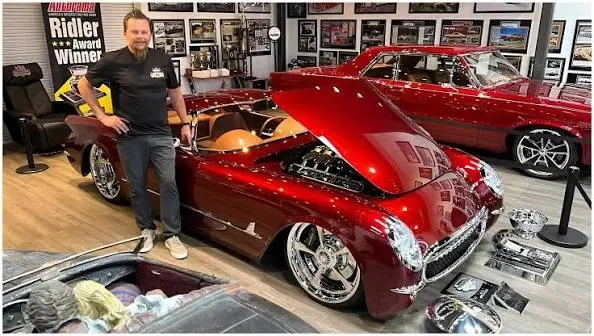
Interest in the Kindig-It lawsuit appears to come from several different sources rather than one single legal controversy. Kindig-It Design is a recognizable custom-car business, and its television exposure means disputes connected with the company can attract substantially more attention than an ordinary disagreement involving an automotive shop.
One verified case is Kindig-It Design, Inc. v. Creative Controls, Inc., filed in the U.S. District Court for the District of Utah in November 2014. Importantly, Kindig-It was the plaintiff in that case. The litigation involved allegations including patent and copyright infringement rather than a broad consumer class action against the company.
Search interest can nevertheless create confusion because different subjects become grouped under the same phrase. Users may encounter references to:
- Intellectual-property litigation
- Customer disagreements
- Expensive or delayed custom builds
- Contract disputes
- Settlement rumors
- Videos discussing Dave Kindig
- Online reviews and complaints
These categories should not be treated as interchangeable. A dissatisfied customer’s review, for example, is not evidence that a court found Kindig-It legally responsible for misconduct.
What Is Kindig-It Design?
Kindig-It Design is a custom automotive design and fabrication business based in the Salt Lake City area of Utah. The company is closely associated with Dave Kindig and became particularly recognizable through the television series Bitchin’ Rides.
Its work goes well beyond routine automotive repairs. High-end custom projects may involve extensive body fabrication, mechanical modifications, custom interiors, paintwork, engineering, and individually designed components.
That distinction is important when considering disputes involving custom-car businesses. A bespoke build can take considerable time and involve changing specifications, parts availability, labor costs, engineering challenges, and customer-requested revisions.
These variables do not excuse contractual breaches if they occur. They do, however, mean that disagreements over a custom build need to be evaluated against the actual contract, invoices, change orders, communications, and representations made by both sides.
Who Is Dave Kindig?
Dave Kindig is the founder and lead designer associated with Kindig-It Design. His public profile grew substantially through automotive television, industry events, custom builds, and the company’s distinctive vehicle designs.
This visibility is one reason his name frequently appears alongside lawsuit searches. When a company founder becomes a television personality, users often search the individual’s name even when the actual legal party is a corporation.
That distinction is legally significant.
A lawsuit involving Kindig-It Design, Inc. does not automatically establish personal liability for Dave Kindig. Corporate liability and individual liability are separate questions, and whether an owner can personally be held responsible depends on the claims, conduct, corporate structure, and applicable law.
Readers should therefore examine the named parties in the actual complaint or court docket instead of assuming every case involving the company is personally against Kindig.
Has There Been a Major Kindig-It Lawsuit?
Yes, there is documented federal litigation involving Kindig-It Design. However, its nature is often lost when the case is discussed online.
Kindig-It Design filed a federal lawsuit against Creative Controls, Inc., Speedway Motors, Inc., Rutter’s Rod Shop, Inc., and other defendants. The action was filed on November 25, 2014, in the U.S. District Court for the District of Utah under case number 2:14-cv-00867.
The dispute included intellectual-property allegations. Court records describe claims involving patents, copyrights, the Lanham Act, conversion, deceptive trade practices, fraud, business disparagement, and unjust enrichment.
In January 2016, the court granted in part and denied in part Creative Controls’ motion to dismiss. Some claims were dismissed for jurisdictional or pleading reasons, while others survived that particular motion.
This distinction changes the narrative substantially: the best-documented major federal litigation was not simply a group of customers suing Kindig-It over vehicle builds. Kindig-It itself initiated the action to pursue intellectual-property and related claims.
| Issue | What Public Records Show |
|---|---|
| Documented federal lawsuit | Yes |
| Kindig-It’s role | Plaintiff |
| Federal case filed | November 25, 2014 |
| Primary dispute | Intellectual property and related claims |
| Court | U.S. District Court, District of Utah |
| Case number | 2:14-cv-00867 |
| Broad consumer class action | Not established by the records reviewed here |
| Universal customer payout | No verified evidence identified |
What Do Public Records Show About Kindig-It Legal Disputes?
Public records provide a more nuanced picture than many lawsuit-focused headlines suggest.
In the Creative Controls litigation, Kindig-It alleged infringement and other misconduct involving its intellectual property. The federal court’s January 2016 decision considered questions including personal jurisdiction and whether particular causes of action had been adequately pleaded.
The litigation also produced additional procedural disputes. For example, Speedway Motors attempted to assert a counterclaim seeking attorney fees and sanctions-related relief. In June 2016, the court granted Kindig-It’s motion to dismiss that counterclaim because the statutes relied upon did not create the independent cause of action Speedway attempted to assert.
There was also related litigation in Michigan. A 2017 Oakland County Business Court decision described allegations by Kindig-It that Creative Controls’ assets had been fraudulently transferred to related entities after a default was entered in the federal litigation.
These records demonstrate why broad phrases such as “Dave Kindig lawsuit” can be misleading. The documented litigation includes complex commercial and intellectual-property issues in which Kindig-It pursued claims of its own.
Was There a Kindig-It Lawsuit Settlement or Payout?
There is no basis to assume that people who have encountered the phrase “Kindig-It lawsuit” are automatically entitled to a settlement payment.
Settlement eligibility normally requires a specific settlement agreement or court-approved class action defining who qualifies. That process usually produces identifiable documents addressing the settlement fund, class definition, claim deadlines, exclusions, and payment calculations.
The federal Kindig-It litigation discussed above should not be confused with such a consumer compensation program. The publicly accessible records reviewed for this article establish litigation involving Kindig-It, but they do not establish a broad class-action settlement paying customers simply because they previously did business with the shop.
Readers should be particularly cautious with webpages claiming a specific “payout per person” without identifying:
- The court and case number
- The settlement administrator
- The settlement agreement
- The eligible class
- The claims deadline
Without those details, a supposed settlement figure may be speculation rather than verified compensation information.
Did Anything Significant Happen With Kindig-It in 2022?
The year 2022 sometimes appears in searches related to Kindig-It, but users should not interpret a frequently searched year as proof that a major lawsuit began or settled during that period.
The clearly documented federal case against Creative Controls began much earlier, in November 2014. Significant rulings in that litigation occurred during subsequent years, including the January 2016 ruling on Creative Controls’ motion to dismiss.
This illustrates an important limitation of search-engine research. Related searches can be generated because many users type similar combinations of a company name, “lawsuit,” and a particular year. They do not independently establish that a case exists.
Anyone researching a supposed 2022 Kindig-It case should look for a docket number, complaint, named plaintiffs and defendants, court jurisdiction, and filing date. If those basic details cannot be located, the claim should not be presented as a confirmed lawsuit.
What Complaints Have Been Reported About Kindig-It Design?
Online discussions about high-end automotive shops can include criticism involving costs, turnaround times, communication, design preferences, or customer expectations. Such comments need to be interpreted cautiously.
A complaint is fundamentally different from a judicial finding. Even a formal lawsuit contains allegations until those allegations are admitted, proven, settled, or otherwise resolved through the legal process.
For custom-car projects in particular, disagreements can become complicated because the scope of work may evolve considerably after a project begins.
Project Timeline Concerns
Custom vehicle builds can require hundreds or thousands of hours of specialized labor. Fabrication, bodywork, paint, wiring, drivetrain installation, upholstery, engineering, and sourcing uncommon parts can all affect completion dates.
A delay by itself does not prove breach of contract.
The legal question typically depends on what the parties agreed to. If the contract establishes a firm completion deadline, a significant unexplained delay may be more important than when the agreement merely provides an estimate.
Change orders also matter. When a customer requests additional fabrication or a different drivetrain, interior, paint scheme, or body modification, the original timeline may no longer accurately represent the expanded project.
Cost and Pricing Expectations
High-end custom cars can become extraordinarily expensive because customers are purchasing specialized labor and one-off fabrication rather than a standardized product.
Cost disagreements may occur when initial estimates change during construction. Unexpected mechanical problems, additional customization, material prices, and customer-requested changes can all increase the final bill.
Legally, the strongest evidence is usually documentary.
Courts may examine the original agreement, estimates, invoices, payment records, written authorizations, and change orders. If additional work was approved by the customer, an increased invoice may have a different legal significance than charges allegedly added without authorization.
Communication Issues
Communication is another common source of tension in long custom-build projects.
Customers may expect frequent updates, photographs, cost reports, or completion estimates. A shop may instead communicate only when major milestones are reached unless the contract establishes another arrangement.
Poor communication can damage a customer relationship without necessarily creating a viable lawsuit.
For communication problems to become legally significant, they generally need to connect to an actionable issue—for example, alleged misrepresentation, failure to disclose material information, unauthorized work, disputed charges, or breach of an express contractual obligation.
Do Customer Complaints Automatically Mean Legal Liability?
No. Consumer dissatisfaction and legal liability are separate concepts.
A customer can genuinely be unhappy with the cost, schedule, communication, appearance, or outcome of a project without necessarily possessing a successful legal claim. Conversely, some disputes can involve genuine contractual or statutory issues requiring legal review.
To establish liability, a claimant generally needs more than a negative experience. Depending on the cause of action, relevant evidence might include:
- A signed contract
- Written estimates
- Payment receipts
- Change orders
- Emails and text messages
- Photographs of the work
- Inspection or expert reports
- Representations made before payment
The precise legal elements depend on the claim and jurisdiction.
This is why online reviews should not be treated as verdicts. Reviews can help identify recurring concerns worth investigating, but courts decide cases based on admissible evidence and applicable law—not the popularity of a complaint online.
How Are Custom Car Shop Legal Disputes Usually Handled?
Custom automotive disputes are often contract disputes at their core. The agreement determines what work was promised, how much the customer agreed to pay, how modifications would be approved, and whether any completion schedule was guaranteed.
Some disagreements can be resolved directly through documentation and negotiation. Others may proceed through mediation, arbitration, small claims court, or conventional civil litigation depending on the contract and amount involved.
Contract Disputes
A breach-of-contract claim generally requires identifying an enforceable agreement and showing that one party failed to perform an obligation required by that agreement.
For a custom car, the disputed obligation might involve fabrication work, parts installation, payment, delivery, or another promised service.
The written contract can therefore become the central piece of evidence.
Courts may also consider amendments, change orders, emails, invoices, and other records showing how the original agreement evolved. A customer’s understanding of the project is important, but documentary evidence generally provides a clearer picture of what each side actually promised.
Payment and Billing Disputes
Billing disputes can involve deposits, hourly labor, parts, subcontractor expenses, storage charges, or additional customization.
Whether a charge is legitimate depends heavily on the agreement.
Suppose a customer originally approves $100,000 of work and later requests extensive additional fabrication. The original estimate may not cap the project’s ultimate cost if the agreement permits approved additions.
A different issue arises when a customer alleges that substantial charges were never authorized. In that situation, invoices, approval records, emails, and change orders become particularly important.
Project Delay Claims
A vehicle taking longer than expected does not automatically establish damages.
Courts may distinguish between an estimated completion date and a binding deadline. They can also consider whether delays resulted from the shop, customer changes, parts shortages, subcontractors, unexpected mechanical problems, or other circumstances addressed in the agreement.
The damages question is separate as well.
Even when a contractual breach occurred, a plaintiff normally must establish recoverable losses and connect those losses to the breach. Merely demonstrating frustration with the project’s duration may not establish the amount of damages sought.
Quality and Workmanship Disputes
Quality disputes can be particularly difficult because custom automotive work sometimes contains subjective design elements.
One customer may dislike a particular aesthetic decision even though the work itself is technically competent. Another dispute may involve measurable allegations such as defective fabrication, mechanical failure, improper installation, or work that does not conform to contractual specifications.
Expert testimony can become important when technical workmanship is contested.
An independent automotive specialist may be able to determine whether the work meets applicable professional standards and whether alleged defects were caused by fabrication, component failure, misuse, or another factor.
Has Any Lawsuit Affected Kindig-It Design’s Business?
The existence of litigation does not, by itself, demonstrate that a company has suffered serious operational damage.
Kindig-It has remained a recognizable name within the custom automotive industry despite its documented legal disputes. Its continuing visibility around custom vehicles illustrates why legal history and business viability should be evaluated separately.
The Creative Controls case is particularly important in this context because Kindig-It was pursuing intellectual-property claims as the plaintiff rather than defending a large consumer class action. Court records identify the dispute as a patent-related federal action filed by Kindig-It.
Businesses involved in intellectual property frequently use litigation to protect patents, trademarks, copyrighted materials, or proprietary designs. Such litigation can still be costly and disruptive, but its existence does not inherently indicate financial distress or wrongdoing by the plaintiff.
Claims that a particular lawsuit “destroyed” or fundamentally damaged Kindig-It therefore require independent evidence rather than assumptions based solely on the existence of court proceedings.
How Should Consumers Evaluate Kindig-It Lawsuit Claims Online?
Start with the source.
A court docket, judicial opinion, filed complaint, settlement administrator, or official government record carries substantially more evidentiary weight than a social-media post or video headline.
For example, the federal Creative Controls litigation can be independently identified through its court, filing date, parties, docket number, and published judicial decisions.
When another supposed lawsuit is mentioned, apply the same standard.
Ask whether the source identifies:
- A real court
- A case number
- Named parties
- A filing date
- Actual allegations
- A judicial decision or current procedural status
Be especially skeptical when an article moves from “customers complained” to “the company was sued” without providing evidence connecting those two statements.
The same rule applies to settlement claims. A legitimate class settlement normally leaves a significant documentary trail. A webpage mentioning an unspecified payout without corresponding court or administrator records deserves additional verification.
How to Separate Verified Facts From Online Speculation
The easiest method is to classify information according to its evidentiary strength.
Verified court information includes filed cases, judicial opinions, docket entries, orders, judgments, and settlement documents.
Allegations are claims made by a party that may still be contested. Filing an allegation in court does not automatically make it true.
Consumer reports describe individual experiences. They can provide useful context but do not independently establish that a company violated the law.
Finally, rumors and social-media discussions should be treated as unverified unless reliable primary documentation supports them.
This framework is especially useful for celebrity-adjacent businesses. Dave Kindig’s television profile means content about him can generate views, which creates an incentive for dramatic headlines.
The safest approach is therefore simple: trace major claims back to primary legal documents whenever possible.
Dave Kindig’s Public Reputation
Dave Kindig has built a substantial public identity around automotive design, custom fabrication, and television.
His reputation is closely connected with ambitious custom builds rather than ordinary repair work. That distinction influences both the audience surrounding the brand and the expectations placed on its projects.
Like many highly visible automotive designers, Kindig also attracts strong opinions. Some enthusiasts praise particular builds, while others criticize styling choices. Such disagreements are normal in an industry where aesthetics are inherently subjective.
Public reputation should nevertheless remain separate from legal analysis.
A favorable reputation does not prove that every customer interaction was satisfactory, just as criticism of a car design does not prove misconduct. When discussing a Kindig-It lawsuit, the relevant legal questions must ultimately be answered through contracts, evidence, pleadings, court orders, and other reliable records.
Dave Kindig Net Worth
Online estimates of Dave Kindig’s net worth should be treated cautiously.
Celebrity and business-profile websites frequently publish net-worth figures without access to audited financial statements, private business valuations, personal liabilities, tax records, investment portfolios, or other information necessary to calculate actual wealth.
Kindig’s television exposure, automotive business, merchandise, custom vehicles, and related commercial activities clearly contribute to his public business profile. That does not make an independently circulated net-worth estimate authoritative.
It is also inappropriate to infer financial status from lawsuit involvement.
A business can participate in expensive litigation while remaining financially successful, and a high-profile entrepreneur can have substantial revenue without possessing the personal net worth claimed by entertainment websites.
Unless Dave Kindig or reliable financial documentation establishes a specific figure, readers should regard precise online net-worth estimates as estimates rather than verified facts.
Are Dave Kindig Cars Available for Sale?
Yes, Kindig-designed vehicles can appear on the collector-car market, although availability changes over time.
These vehicles are not comparable to ordinary mass-produced cars. Their value may depend on the underlying vehicle, fabrication quality, provenance, awards, television exposure, specifications, build history, and buyer demand.
Some Kindig vehicles can command significant asking prices or auction bids, but a listing price does not establish actual market value.
Potential buyers should conduct the same due diligence expected with other high-value custom vehicles. That can include verifying ownership history, inspecting fabrication and mechanical systems, reviewing build documentation, and confirming exactly which components were designed or constructed by Kindig-It.
For especially expensive vehicles, an independent pre-purchase inspection and professional valuation may be appropriate before completing a transaction.
Read: Symmetry Financial Group Lawsuit
Read: Zoloft While Breastfeeding Lawsuit
Read: Vegamour Lawsuit
Read: Dwayne Johnson Energy Drink Lawsuit
Read: Cash App Class Action Lawsuit Settlement
Read: Chobani Yogurt Lawsuit
Read: Life360 Lawsuit 2026
Read: Isotonix Lawsuit
Frequently Asked Questions
Is there really a Kindig-It lawsuit?
Yes. Kindig-It Design has been involved in documented litigation. One major case was Kindig-It Design, Inc. v. Creative Controls, Inc., filed in federal court in Utah in 2014. Kindig-It was the plaintiff in that dispute.
Was Dave Kindig personally sued?
A lawsuit involving Kindig-It Design does not automatically mean Dave Kindig was personally liable. The company and its owner are legally separate. Personal liability depends on the parties named in the case and the specific allegations involved.
Are online complaints about Kindig-It proof of wrongdoing?
No. Customer complaints may describe real experiences, but they do not prove legal wrongdoing by themselves. Liability depends on contracts, evidence, applicable law, and any findings made during formal court proceedings.
Did Kindig-It win its lawsuit?
The case had multiple rulings, so it cannot accurately be described with a simple yes or no. Some claims were dismissed while others survived particular motions. The complete court history provides the clearest picture.
Has a Kindig-It lawsuit settlement been announced?
There is no widely verified consumer settlement showing that ordinary Kindig-It customers can claim a standard payout. A legitimate settlement normally includes a court case, eligibility rules, deadlines, and an official settlement administrator.
Final Thoughts
The Kindig-It lawsuit topic is more complicated than many search results imply. Public records confirm significant litigation involving Kindig-It Design, including its federal case against Creative Controls and related defendants. In that important dispute, however, Kindig-It was pursuing intellectual-property and commercial claims as the plaintiff—not simply defending itself against a mass consumer lawsuit.
Customer complaints, online discussions, and lawsuit allegations should also remain separate from proven facts. A complaint can deserve investigation without establishing liability, while a filed lawsuit contains claims that may still be contested.
For consumers researching Kindig-It, the most reliable approach is to prioritize court records, written contracts, documented communications, and verified settlement information. Legal outcomes depend on evidence and applicable law, not the number of times a claim is repeated online.