

McDonald’s has marketed its hamburger patties as being made with 100% beef for years, but the claim continues to attract questions online. Searches for the McDonald’s 100% Beef Lawsuit often mix together several very different issues: rumors about fillers, the old French-fry beef-flavoring controversy, false-advertising lawsuits, beef-price litigation, and newer cases involving other McDonald’s products.
That mixture can make the legal picture look much more straightforward than it really is.
McDonald’s currently states that its U.S. burger patties are made from 100% USDA-inspected beef, with no fillers, additives, or preservatives. Salt and pepper are added during cooking.
At the same time, McDonald’s has faced genuine food-related litigation. The important question is whether those cases actually challenge the composition of its ordinary hamburger patties—or whether they involve something else entirely.
What Is the McDonald’s 100% Beef Lawsuit?
The phrase “McDonald’s 100% Beef Lawsuit” is commonly used online as though it refers to one formal nationwide case challenging the company’s hamburger-patty ingredients.
That description is misleading.
I did not identify a verified nationwide settlement or class action establishing that McDonald’s falsely labels its ordinary U.S. hamburger patties as 100% beef.
What does exist is a collection of separate legal disputes involving food labeling, advertising, supply-chain pricing, and other menu items.
McDonald’s official U.S. information currently says every burger patty is made from 100% real beef and contains no fillers, additives, or preservatives. The company’s ingredient information also states that the beef is ground, formed into patties, and, for many products, flash frozen before distribution.
There is also documented historical litigation involving beef-derived flavoring in McDonald’s French fries.
That dispute is real—but it did not establish that McDonald’s hamburger patties were made with non-beef fillers.
Keeping those two issues separate is essential.
McDonald’s 100% Beef Lawsuit Update for 2026
As of August 2026, I did not identify authoritative evidence of a nationwide class-action settlement finding that McDonald’s ordinary U.S. hamburger patties were falsely advertised as 100% beef.
McDonald’s continues to publicly state that its U.S. patties are 100% real beef without fillers, additives, or preservatives.
There are, however, other current legal developments involving meat and food advertising.
One is McDonald’s own antitrust lawsuit against major beef processors. Another is a proposed class action filed over the McRib, which concerns whether consumers were misled about the type of pork used in that sandwich. Neither case establishes that ordinary McDonald’s hamburger patties contain fake beef.
| Question | Current Status |
|---|---|
| McDonald’s says U.S. patties are 100% beef | Yes |
| Historical beef-related food litigation | Yes, involving fries and beef flavoring |
| Verified nationwide patty-composition settlement | Not identified |
| Verified payout for ordinary hamburger buyers | Not identified |
| Official claim form for a “100% beef” patty case | Not identified |
| McDonald’s suing beef processors | Yes, separate antitrust case |
| McRib proposed class action | Yes, separate pork-advertising case |
The safest way to evaluate any new “beef lawsuit” headline is to ask what product the case actually concerns.
McDonald’s Beef Lawsuit Settlement Details
The most commonly confused settlement comes from litigation over McDonald’s French fries and beef-derived flavoring.
In 2002, McDonald’s agreed to a settlement that included an apology and approximately $10 million in charitable payments after litigation alleged that the company had not adequately disclosed the use of beef-derived flavoring in fries and related products to vegetarian and religious consumers.
That case matters historically because it involved beef and ingredient disclosure.
But it does not prove that McDonald’s hamburger patties contained undisclosed fillers.
The dispute focused on fries, vegetarian representations, and communication about beef-derived flavoring.
For current consumers, the main point is simple: the existence of a past $10 million beef-related settlement does not mean there is now a $10 million fund available to hamburger purchasers.
McDonald’s Beef Lawsuit Payout Estimates
There is no reliable basis for estimating a payout from a supposed current “100% beef” hamburger settlement when no verified nationwide settlement structure has been identified.
Real class-action payouts depend on details such as:
- Total settlement amount
- Number of eligible class members
- Number of valid claims
- Purchase dates
- Proof requirements
- Covered products
- Attorneys’ fees
- Administrative expenses
- Court-approved allocation rules
Without those elements, a specific payout estimate is little more than speculation.
The historical fries case also should not be used as a payout calculator. The reported $10 million settlement component went toward organizations and broader settlement obligations rather than creating a simple cash payment for every customer who purchased fries.
How Much Can You Get From the McDonald’s Beef Lawsuit?
At present, there is no verified standard compensation amount for ordinary customers who purchased McDonald’s hamburgers based on a nationwide “100% beef” settlement.
If a genuine false-advertising class action ever reached settlement, relief could theoretically include:
- Cash payments
- Refunds
- Vouchers
- Labeling or advertising changes
- Other court-approved remedies
But those remedies cannot be assumed in advance.
A legitimate settlement notice would identify the supervising court, class definition, products involved, compensation terms, deadlines, and claim administrator.
Without that information, any fixed-dollar payout claim should be treated cautiously.
How to Join the McDonald’s Beef Lawsuit
There is no verified universal procedure for joining a nationwide McDonald’s “100% beef” hamburger case simply because someone purchased a Big Mac, Quarter Pounder, hamburger, or cheeseburger.
If a class action were certified or settled, an official notice would normally explain:
- The case name.
- The court and case number.
- Who qualifies.
- Which purchases are covered.
- Whether receipts are required.
- How to submit a claim.
- The filing deadline.
- The official settlement administrator.
Until those details exist, unofficial “claim now” pages should not be treated as proof that a case is open.
A person considering an individual legal claim would need to evaluate their own circumstances separately.
Who Is Eligible for the McDonald’s Beef Lawsuit?
No nationwide eligibility criteria can be stated because no verified nationwide settlement over McDonald’s ordinary hamburger-patty “100% beef” representation was identified during this review.
In a hypothetical false-advertising case, eligibility could depend on factors such as:
- Product purchased
- State of purchase
- Purchase dates
- Advertisement viewed
- Whether the representation affected the purchase
- Proof of payment
- Applicable state consumer-protection law
Class definitions can be quite narrow.
Simply having purchased a McDonald’s hamburger would not automatically create a right to compensation.
Is McDonald’s Beef Really 100% Beef?
According to McDonald’s U.S., yes.
The company states that every U.S. burger patty is made with 100% USDA-inspected beef and contains no fillers, additives, or preservatives. Salt and pepper are added when the patties are cooked.
McDonald’s also states that ground beef used in its burgers can come from cuts including chuck, round, and sirloin.
That point sometimes causes confusion.
“100% beef” does not mean the patty consists of one specific steak cut. Ground beef can be made from multiple beef cuts while still remaining entirely beef.
It is also important to distinguish the patty from the finished sandwich.
A Big Mac, Quarter Pounder, or cheeseburger contains additional ingredients such as buns, pickles, cheese, sauces, onions, and seasoning. The “100% beef” representation concerns the meat patty itself.
McDonald’s Beef Ingredients at the Center of the Lawsuit
Much of the online controversy centers on what people suspect may be inside the patties.
Common rumors mention:
- Soy
- Cereal fillers
- Artificial binders
- Preservatives
- Non-beef meat
- “Pink slime”
- Hidden additives
McDonald’s U.S. currently rejects those claims with respect to its hamburger patties, stating that the patties contain 100% beef with no fillers, additives, or preservatives.
That is a company representation, not a judicial finding.
If a plaintiff wanted to challenge it in court, evidence would be required showing that the representation was inaccurate or misleading.
Online suspicion alone would not establish that.
McDonald’s Beef Filler Allegations Explained
Rumors about fillers have followed McDonald’s for years.
The problem is that many online claims repeat one another without providing testing, regulatory findings, ingredient records, or court evidence.
McDonald’s says its U.S. hamburger patties do not contain fillers, additives, or preservatives.
A legally significant filler allegation would require something stronger than speculation.
Potential evidence might include:
- Laboratory testing
- Internal ingredient records
- Supplier documentation
- Regulatory findings
- Admissions
- Expert evidence
Without support of that kind, claims that McDonald’s secretly mixes non-beef fillers into its patties should remain described as rumors or allegations.
What Is Actually in McDonald’s Beef Patties?
McDonald’s says the patty itself contains beef.
Its U.S. burger information identifies beef from cuts such as chuck, round, and sirloin, which is ground and formed into patties.
The preparation process can vary by product.
Many patties are frozen after formation, while Quarter Pounder patties are marketed as fresh beef at participating U.S. restaurants.
The easiest way to understand the composition is to separate:
- Patty: Beef
- Seasoning: Salt and pepper during cooking
- Finished burger: Beef patty plus bun, condiments, vegetables, cheese, or sauces depending on the menu item
That distinction eliminates much of the confusion behind the “100% beef” wording.
McDonald’s 100% Beef Claim and False Advertising
A successful false-advertising case generally requires more than a consumer simply interpreting an advertisement differently from the company.
Courts look at the actual statement, context, evidence, and applicable consumer-protection law.
A useful example comes from separate litigation against McDonald’s and Wendy’s over burger advertising.
In 2023, a federal judge dismissed claims alleging that the companies used advertisements showing larger and more appealing burgers than customers actually received. The judge found that the plaintiff had not adequately shown that a reasonable consumer would be misled, and certain advertising imagery was treated as non-actionable puffery.
That case had nothing to do with whether McDonald’s patties were 100% beef.
But it illustrates why a false-advertising lawsuit depends on the exact representation being challenged.
The McDonald’s Fake Beef Lawsuit Explained
The phrase “McDonald’s fake beef lawsuit” is not a good description of the verified legal record.
It implies that a court has already determined McDonald’s sells fake beef.
I did not find evidence supporting that conclusion.
McDonald’s continues to state that its ordinary U.S. hamburger patties contain 100% beef.
Other lawsuits involving McDonald’s meat products should not be merged into that claim.
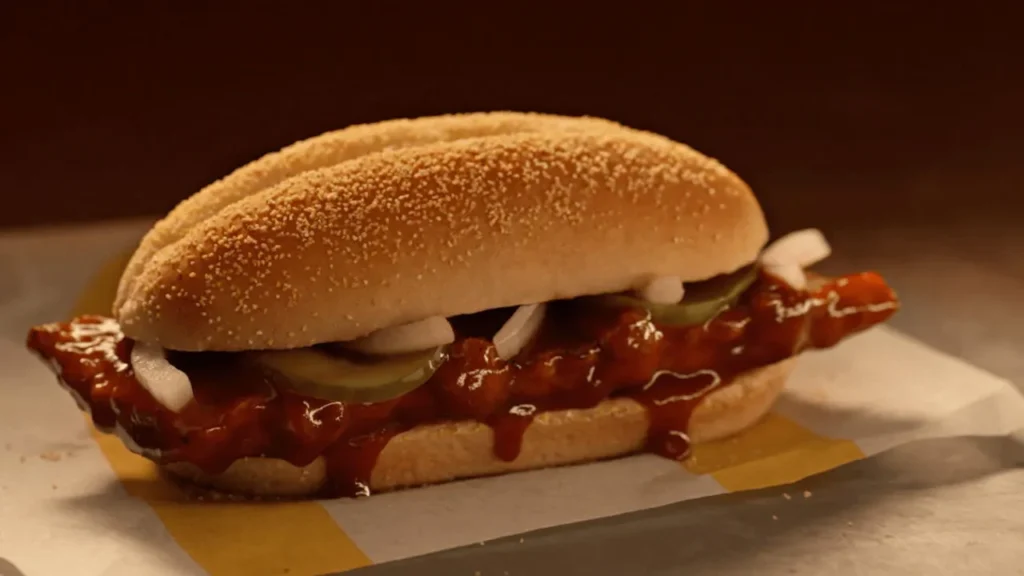
For example, a proposed class action filed in December 2025 challenges how McDonald’s markets its McRib. Plaintiffs allege that the name and presentation cause customers to expect actual pork rib meat. McDonald’s disputes those allegations and says the McRib is made with 100% pork.
That lawsuit concerns pork and the meaning of “McRib.”
It does not concern hamburger-patty beef composition.
The “100 Percent Beef” Company Name Myth
Another long-running story claims that “100% Beef” is actually the name of a supplier.
According to the rumor, McDonald’s supposedly avoids ingredient rules by buying meat from a company called “100% Beef,” allowing it to call the patties “100% beef” regardless of their actual contents.
The story does not fit McDonald’s current ingredient disclosures.
McDonald’s expressly says the phrase refers to the composition of its patties, which it represents as real beef without fillers, additives, or preservatives.
More importantly, simply naming a supplier “100% Beef” would not create a blanket legal right to mislead consumers about the actual composition of food.
Advertising claims are evaluated based on what they communicate to consumers, not merely on the name of a supplier.
McDonald’s Consumer Fraud Lawsuit in 2026
McDonald’s faces consumer litigation from time to time, but those lawsuits involve different products and legal theories.
The clearest current example is the proposed McRib class action filed in December 2025 in federal court in Illinois.
The plaintiffs allege that customers are led to believe the McRib contains pork rib meat when, according to their complaint, it does not. McDonald’s disputes the allegations and maintains that the McRib is made from 100% pork sourced from U.S. farmers and suppliers.
The lawsuit seeks class-action treatment and alleges deceptive marketing and related claims.
Why the McRib Case Does Not Prove a “100% Beef” Claim
The McRib case is relevant to McDonald’s advertising practices but not to the composition of its hamburger patties.
It concerns:
- Pork rather than beef
- The meaning consumers attach to the word “Rib”
- The shape and presentation of the product
- Alleged expectations about specific cuts of pork
That is fundamentally different from alleging that a hamburger patty marketed as 100% beef contains something other than beef.
Combining the two cases would create a misleading legal narrative.
McDonald’s Beef Class Action in 2026
No verified nationwide class action was identified during this review specifically alleging that ordinary McDonald’s U.S. hamburger patties are not 100% beef.
That does not mean McDonald’s is free from class-action litigation generally.
It means the subject of the case matters.
A proposed class action is also not the same thing as a certified class. Courts can dismiss claims, deny certification, narrow the class, approve a settlement, or allow individual claims to continue.
A legitimate class-action notice should identify:
- Court
- Case number
- Named plaintiffs
- Named defendants
- Class definition
- Products
- Purchase period
- Legal claims
- Rights of class members
If an article simply says “McDonald’s beef class action” without those details, further verification is warranted.
McDonald’s Beef Price-Fixing Lawsuit
There is one very real recent lawsuit involving McDonald’s and beef.
But in that case, McDonald’s is the plaintiff.
In October 2024, McDonald’s sued major meat processors including Tyson Foods, JBS, Cargill, and National Beef Packing, alleging that they conspired to restrict beef supplies and inflate prices. The federal antitrust complaint alleges conduct dating back to at least 2015.
McDonald’s seeks damages and other relief for allegedly paying artificially inflated beef prices.
Why This Case Is Different
This lawsuit concerns beef pricing and competition.
It does not allege that McDonald’s hamburger patties are fake, diluted, or mislabeled as 100% beef.
That distinction is important because search results for “McDonald’s beef lawsuit” can surface this antitrust case alongside consumer ingredient questions.
They are unrelated legal theories.
McDonald’s Beef Labeling Lawsuit Timeline
Keeping the different events separate makes the history much easier to understand.
| Period | Development |
|---|---|
| 1990s–present | Rumors circulate about fillers, fake beef, and a supposed “100% Beef” supplier |
| 2001–2002 | Litigation focuses on beef-derived flavoring in fries and vegetarian representations |
| 2002 | McDonald’s agrees to apology and roughly $10 million in charitable payments tied to the fries dispute |
| 2023 | Federal court dismisses separate burger-size advertising claims |
| 2024 | McDonald’s files beef-price-fixing lawsuit against major meat processors |
| 2024 | E. coli outbreak investigation initially considers beef and onions; evidence ultimately points to onions rather than patties |
| December 2025 | Proposed McRib advertising class action filed |
| 2026 | McDonald’s continues to state its U.S. hamburger patties are 100% beef |
The fries litigation remains one of the most frequently misrepresented events.
It involved beef-derived flavoring in fries—not proof that hamburger patties contained fillers.
McDonald’s Beef Quality and Ongoing Legal Action
Quality, safety, composition, and advertising are four different issues.
A burger can be 100% beef while a consumer dislikes its quality.
A food-safety outbreak can involve a burger without the beef patty being the source.
And a false-advertising case can challenge presentation without challenging ingredients.
The 2024 Quarter Pounder E. coli outbreak illustrates this distinction clearly.
Federal and state investigators initially examined both onions and beef. Later evidence pointed to slivered onions as the likely source, while beef-patty testing did not implicate the patties. The FDA ultimately closed the outbreak investigation after the onion-related risk was addressed.
McDonald’s also said its supply-chain traceback and testing had ruled out Quarter Pounder patties as the source.
That episode therefore should not be cited as proof of fake beef or a composition defect.
Read: Primal Queen Lawsuit Update 2026
Read: Samsung S22 Software Update Lawsuit
Read: BSA Lawsuit Update Today Live
Read: Native Hair Loss Lawsuit
Read: Hometown HGTV Lawsuit Update
Read: Starbucks Lawsuit 2026
Read: Temu Lawsuit Claim Form Online
Frequently Asked Questions
Is there really a McDonald’s 100% Beef Lawsuit?
I did not identify a verified nationwide 2026 class action or settlement establishing that McDonald’s ordinary U.S. hamburger patties were falsely marketed as 100% beef. McDonald’s continues to state that the patties are 100% real beef without fillers, additives, or preservatives.
Has McDonald’s reached a beef lawsuit settlement?
McDonald’s reached a documented settlement in the early 2000s involving beef-derived flavoring used in fries and related vegetarian representations. That settlement should not be described as a hamburger-patty composition case.
Can I file a McDonald’s beef lawsuit claim form?
No verified nationwide claim form was identified for ordinary customers seeking compensation over McDonald’s 100% beef hamburger representation.
Does McDonald’s put fillers in its beef patties?
McDonald’s says it does not. Its U.S. website states that its patties contain 100% real beef with no fillers, additives, or preservatives.
How much is the McDonald’s beef lawsuit payout?
No verified standard payout exists for a nationwide “100% beef” hamburger settlement based on the sources reviewed.
Was McDonald’s sued because its fries contained beef?
Yes. Litigation in the early 2000s involved McDonald’s disclosure of beef-derived flavoring in French fries and vegetarian representations. The settlement included an apology and approximately $10 million in charitable payments.
Is McDonald’s currently involved in a beef lawsuit?
Yes, but in a different sense. McDonald’s sued major beef processors in 2024 over alleged price fixing and supply restrictions. That antitrust lawsuit does not challenge the composition of McDonald’s hamburger patties.
Is there a current McDonald’s meat advertising class action?
Yes. A proposed class action filed in December 2025 challenges marketing of the McRib. It concerns alleged consumer expectations about pork rib meat, not McDonald’s ordinary beef patties. McDonald’s disputes the allegations.
Final Thoughts
The McDonald’s 100% Beef Lawsuit topic combines real legal history with a large amount of internet confusion.
McDonald’s has faced genuine food-related litigation. Its early-2000s fries case involved beef-derived flavoring and vegetarian disclosures. In 2024, the company itself sued major meat processors over alleged beef price fixing. And in late 2025, consumers filed a proposed class action involving how the McRib is marketed.
None of those cases establishes that ordinary McDonald’s U.S. hamburger patties contain fake beef or undisclosed fillers.
McDonald’s continues to state that its U.S. patties are made from 100% USDA-inspected beef with no fillers, additives, or preservatives.
For readers searching for a settlement or payout, the best rule is simple: look for an identifiable case number, court, class definition, settlement administrator, and court-approved claims process.
Until those elements exist for a specific 100% beef patty case, rumors, historical settlements, supply-chain litigation, and separate advertising lawsuits should not be presented as one nationwide McDonald’s beef settlement.